Sunday, April 17, 2011

Newstory Reflection - Angela Ng


A billboard advertisment from TV program "I want to be CE ", which is produced by ATV was being banned- 16 March 2011, Apple Daily Newspaper

Recently, ATV has produced a new TV show called “ I want to be CE”. This show is mainly focus on mocking the political problems in Hong Kong, such as Donald Tsang has been portrayed as a Japanese superman in the trailer and they have used the classical theme song from the superman cartoon, but they changed the lyrics into Chinese with political meanings. ATV has upload the tailors on youtube and they hit rate are very high and people are start sharing them on some social network, for example blog and facebook. Furthermore, they have put their billboard advertisement near the Cross Harbour Tunnel as the promotion. However, the advertisement was being banned and they were not allowed to put this kind of Ad. on the billboard.

 First, the program “ I want to be CE” actually is a culture jamming TV Show and this is the main selling point in the whole show. The basic definition of culture jam is
‘rhetorical process of intervention and invention’, which is introduced by Christine Harold. Also, pranking is one of the elements of culture jamming. So because of the sharing in the youtube and facebook, people start to aware this show and it has become a topic. On the other hand, there may lead to the suppressive of the free press or the capitalist consumerism due to the hit rating in internet and the print advertisement in the public place in this case. It is because ATV cannot choose their commercial place to show the Ad and the Hong Kong people are being exploited to see this advertisement.

News Reflection Yan Shek

Many people may think that the function for culture jamming is to solve problems. No doubt that culture jamming really effective for solving problems. In this article it has point out some other thing that culture jamming is useful for.

One of the important functions of culture jamming is to catalyze outreach and solidarity. First, it can influence people thinking or their action. Also, it has power to influence the people to change their attitude or decision making. Some of the advertising will try to use it to affect their audiences but culture jamming is something related to the society and self-awareness. Some people argue that the culture jamming is something that like commercial advertising but in the article it has emphasize that culture jamming will never approach the scale of commercial advertising. The jammer will use internet to publicize their message to the public. Second, the culture jamming can work like a group project. It can help to build up a new community that let people together on a regular basis.

Also, culture jamming is something that related to our culture. It can help to build counter-culture. "[P]roblems cannot be solved by the same level of thinking that created them" (Einstein). Culture jamming can help us to change the level of thinking. It has given us a choice to think more about our society and step out or creative a new culture in order to solve our problems in nowadays. Some people may argue that culture jamming is not good because it has breaking down our traditional culture. But in the recent world, change is one of the important things that we should do.

Culture jammin is just one of the tools that to helps you to create a better socteiy. But the important is we should use it with awareness of what it can and can't accomplish.
http://www.worldchanging.com/archives/003259.html

Friday, April 15, 2011

Newstory Reflection, by Ashley Wong


The Body Electric


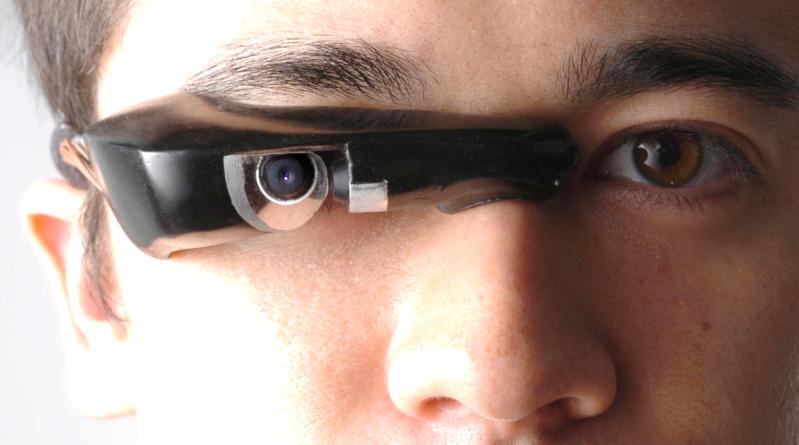
This news feature talks about the views of Steve Mann, who is a cyborg, on human-technology relationship. Why cyborg? And what’s his invention?

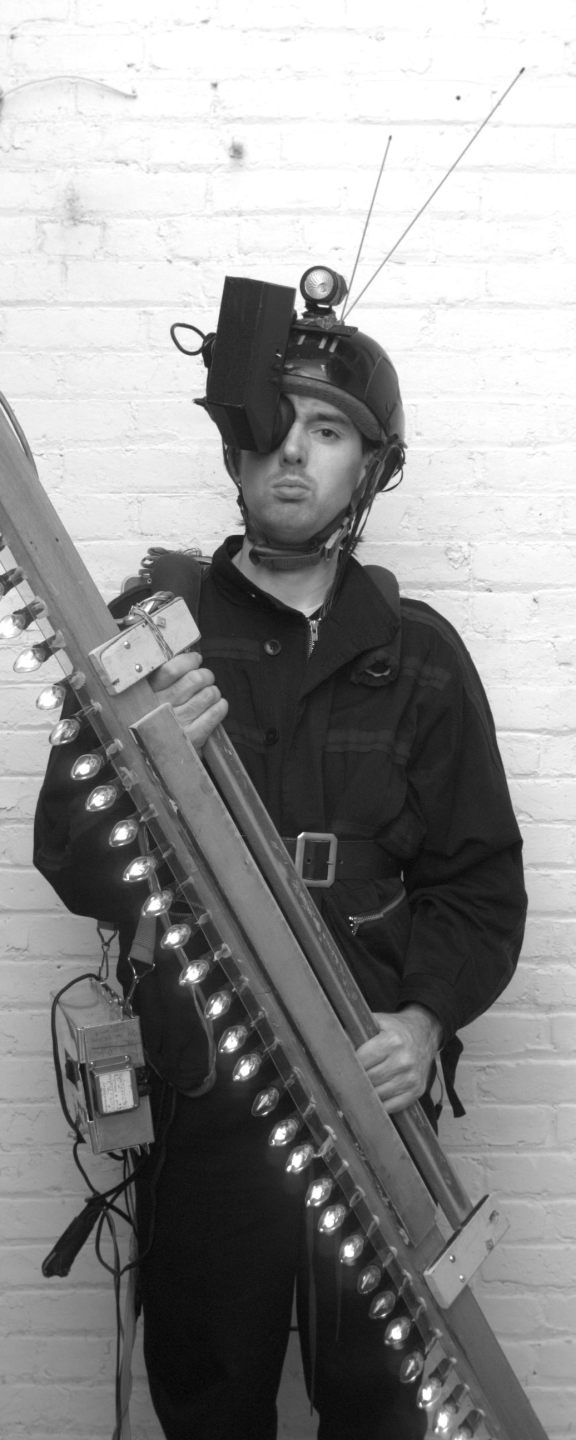
Steve is a professor of engineering at the University of Toronto and a devoted techno-futurist. In his young age, he was already invented a WearComp (a series of wearable computer devices). He is used to attach this electronic device such Eye Tap to his body (a camera attached to his head). We can define that when he attaches electronic devices to his body, he is already a cyborg, which contains both biological and artificial parts.

Steve’s behavior is interesting me. According to the news article, he wore the WearCam when giving talk at Universities. What the camera recorded at that moment which would project onto screen and audiences could see what he drew at the desk through the projection. He points out that is “a deeper identification with another person”, which means it was a different way to connect with audiences and they can “become” him to see what he sees exactly.

We can see that what he does is confusing the boundaries of body and machine – neither fully human nor fully machine. I think he was not just combining the camera and body, but controlled what audience saw and how the world or reality was represented.

Is it weird? In my opinion, it is quite interesting. It makes me think of JenniCAM. In the case, Jenny set a cam in her room. People can see her daily life in her room through the online cam in her blog. I think the difference between Steve and Jenny is Jenny is both the object and subject in her cam, but Steve is the director and monitor behind the cam. We see what Steve look at this world through his eye cam and see the daily life and what Jenny do in her room. Even they are also control what we can see through the cam, Steve brings a new perspective to us. He arouses the attention of why we have to rely on technology but not aversely monitor them?

With the development of technology, we used to use it and somehow rely on them. Steve fears our ability to communicate with other will be suppressed as we are living in a panopticon. Hence, he created the WearComp in order to “reclaim our individual and collective freedoms”. After reading this news article, I have a question: Is human now controlling technology (machine) or technology controlling us? Just like the example in the article: if you receive a Microsoft Word document, you have to buy and learn Windows and Word. So how does the technology affect our society? What are the relationship between human & technology in the future?


Here's the video from YouTube: Steve explains the Eye Tap


Source:
http://thevarsity.ca/articles/44525

News Reflection – Poyu Ng


This piece of news is a about How a boy,Stepan, go to school without going out from his house. Stepan cannot go for school because of his immune system. His immune system is too fragile and he is not allowed to go out. He go to school by using a robot, he sit in front of the computer and control the robot and have interaction with the teachers and the classmates.


Stepan feels he is really in the class because he can totally control every details of the robot, and the classmates also call the robot as Stepan. I think this is good robot for the people who have problems of their legs or some other frail of the body, this can help them to use computer to learn, to work or do other things and have a normal life by using their own robot. They can just sit at home and have the class or work.


However, I think there also have disadvantages, because people can use an excuse and stay at home. However, you don’t know who is controlling the robot, although there is a webcam in the robot, you can’t see the other side, only the controller can see from the webcam because they have to control the robot where to go or see the surroundings.


Also, this raises the question about the identity. In this case, Stepan still is Stepan but is the robot is also Stepan? Is it the same person? The controller is stepan? We don’t know Stepan is really the controller, because they cannot see from the robot. Also, is Stepan always sitting in front of the computer and having lessons? Stepan have to use computer and the robot to have lessons, I think he is a cyborg because he must use the machines to have his normal school life. On the other hand, I think the people using iPhone or iPod or other machine in their daily life, they are cyborgs too, because they start to think these digital devises are a part of them if they forget to bring the devises they will feel something wrong.


In this digital age, people are going turns to be cyborgs or the defining of human and cyborgs are being blur. But, I still think I am human.

Source:
http://www.physorg.com/news/2011-01-robot-russian-school-sick-schoolboy.html

Thursday, April 14, 2011

News story reflection by Frances Leung

Use of social networking sites is always a controversial and hot discussion recently. Mr. Rory Cellan – Jones, created his own blog in BBC news’ homepage of the UK, has raised an argument of who could topple Facebook, a social networking site. His argument mainly focused on the massive global use of Facebook while although new social networking sites are being constructed and introduced to the public, they seems still cannot act as its threats. The whole article written didn’t raised any concern related to our course though, but this leads us to do some hard thinking of different aspects like building up identities among friends and privacy concern, feasibility of cyberstalking or cybercrime and concern on online regulations in online communities.

Firstly, Boyd has suggested that teens enjoy much in cyberspace to construct their social life through social networks like Facebook, the blogger mentioned. Not only teens, adults also manage how to present themselves in the platform of social networks to others. This is the matter of impression management which is aimed at constructing the online profile of one self. However, although they thought that they are only sharing stuffs among friends, and this seems a really private place for one self to communicate with friends, it is argued that information shared on sites are actually public – shared and authorized to the sites enabling them to share your stuffs to those you are not knowing. This is to say, there are some invisible audiences always linked with the sites which may affect the building up of identities so to destruct one’s management in networked public. So, so – called ‘privacy’ is no longer private but being exposed to the public.

On the other hand, social networks have enhanced an online community for users which give platforms to some of them to bully or even harass others. In particularly focusing on Facebook, although it requires user to provide real information to the database and aims at providing a virtual and friendly environment to enhance friendship or other relationships, it fails to prove the authentication of all of the Facebook users. As mentioned in readings of week 10 which is a case study of LamdaMOO, failure of authentication in Facebook cannot remove the threat of somebody like Mr. Bungle. Yes, you may say there is a function called ‘Report this person’ but in the case of LamdaMOO, Mr. Bungle can again go back to the community with another identity called Dr. Jest so there is no way to prevent this kind of persons eventually to the case.

Besides, LamdaMOO is a community that has no regulations set by the designer but rather organized in a more democratic way like holding poll and voting by users. This is not the case in Facebook particularly which has set tones of regulations where users always neglected as they only have to tick the box ‘agree’ or allow a request for permission. Things people posted on the site would be automatically authorized to Facebook to have other access on it like sharing to someone you don’t know. So, are your updates on your profile still private to your friends? This is obviously not the case. They are all publicly shared but seem to be privately shared among friends. The writer has introduced a site called Diaspora where users maintain their ownership to their own stuffs shared. However, this cannot successfully fight down Facebook of its global massive common use as people have developed their online community in Facebook as a root that it is really difficult to move to other sites. The relationship between users and Facebook is like mutualism that users develop their niche among their friends while Facebook holds the authorization of all databases as exchange.

In this case, is there still freedom and privacy in this virtual network? Is it still private? The concept of this is being blurred as the universality of social network is being a trend. Dependence on social network is also more and more serious either. The probability of people being cyborgs is also increased.


Source: http://www.bbc.co.uk/blogs/thereporters/rorycellanjones/2011/02/the_future_of_friends_-_who_ca.html


Week 10 presentation: Online Community

BY Anna and Audrey
Our presentation in this week is online community. There are two readings for this week. The first reading is related to the Bungle Affair happened in LambdaMOO and the second reading is more factual, talking about the concept of online community and the author’s experience in it.

First of all, what is online community? Quoted from the second reading, Rheingold explained it in this way,"Social aggregation that emerges from the Net when enough people carry on those public discussions long enough, with sufficient human feeling, to form webs of personal relationships in cyberspace." We can interpret it as the social network which formed by individuals and these individuals interact through specific media. These kinds of interaction do not restricted by geographical and political boundaries.

In the first reading, the Bungle Affair had happened in LambdaMOO. LambdaMOO is a text-based virtual community, which means people use texts to interact. The characteristics of LambdaMOO is that it allows all people around the world to chat; even you are not a member. Its membership is free; you can simply apply it with an email account. Also, LambdaMOO is like a real community, there are many rooms, like living room, city hall, etc. Those rooms are actually created by the members. Furthermore, there are also no elaborate graphical avatars or 3-dimensional space warriors.

Mr. Bungle is one of the members in LambdaMOO. He used voodoo dolls to control people and raped the some female members in LambdaMOO through texts. Those female characters felt hurt in both mentally and physically. This led to a controversy if this kind of case belongs to virtual rape.

This became a hot topic in LambdaMOO. Some people suggested kicking Mr. Bungle out and some disagreed. For those which support kicking Mr. Bungle out, they thought that Mr. Bungle was disturbing the order in this community. If there was no punishment on him, there may be second, third and even more people follow Mr. Bungle and do the same things on the others. And for those who disagreed to kick Mr. Bungle out, they believed that toads are all around the world, it is impossible to avoid them. Also, there are no regulations for using this virtual community; it was unfair to prove Mr. Bungle has done wrong things.

In this controversial issue, the administrator decided to kick Mr. Bungle out. The last sentence is that “Mr. Bungle was truly dead and truly gone.” Later on, LamdaMOO introduced a new petitions and ballots system. Members can vote and the side with more people support will become the stand of LamdaMOO.
It comes to nearly the end of this issue; however, a member named Dr. Jest started to do something strange in the community, like forcing people to put their head into jars. Some people thought that this might be another identity of Mr. Bungle. Since there were not enough votes, others failed to toad him out and it ends with left of Dr. Jest.

After having a summary of the readings, it comes to our discussion time.

1a. Do you think that the Virtual Rape (like Bungle Affair) is really a crime? Why?
We think that it is a shitty things, but not as serious as a crime. Unlike the rape case in reality, virtual rape in this case does not include any physical touches. People may argue that those texts would mentally hurt the victim, however, is it really so powerful to do so? In our opinion, the victims in a rape case in real community are passive. It is hard for them to resist the violators. On the other hand, victims in virtual community can be relatively more active. When they receive those messages or requests, they can immediately reject, ignore or even block violators to prevent getting hurt.

1b. If you say virtual rape is really a crime, then how about stealing crops in Facebook?
(We think it is not. Actually, it depends on the seriousness of the issue. Like those facebook games, it does not really affect us in reality. Although those virtual crops stolen by the others, we did not have any actual lost in this case.)

In the video, the man shows the things that we will not do in reality but in facebook. However, in the second reading, Rheingold mentioned “People in virtual communities do just about everything people do in real life, but we leave our bodies behind.”
2a. Are there any differences for the things that you have done/ will do in the reality and virtual community?

Yes. We may do some different things between the real life and virtual communities. Just like in real life, we will not suddenly speakthose sentences in poem. And the use of signs or texts in the internet, like “lol”, “xd” or even the “like” function in facebook may not really express people’s emotion in ture.
A reason causes this maybe because of the moral standard in reality. Most people will not talk to strangers in street, but they will add strangers in Facebook. Another example is that people may choose downloading and watching pornography through computer, but not buying pornography in the streets.

2b. Is it because of the level of freedom in virtual community differ from the reality?
Yes. Actually, we have a doubt in the gender of Mr. Bungle in reality. No one can ensure Mr. Bungle is a man. How about if Mr. Bungle is a woman in reality? Or the victims are men? Or even those victims are another online identity of Mr. Bungle? We cannot ascertain others in the virtual community.
There is no classification of gender, race and positions in virtual community; we can have the identity(s) that we like. Since the function of internet advancing, users can create or have different masks and role play in the internet. In our daily life, the norms and standard in society restrict the things that we can do and should do. The freedom in internet may help people to rebuild and orientate their identity that do not accept by others in reality.

3. Is it necessary to have a set of online regulations for us to follow? If yes, who do you think would be the one to decide those rules and how to determine them?
We think that there maybe a need to set some regulations for the virtual communities, however, it is hardly to be achieved. The Network is universal, to a certain extent, there is no geographical distinction, because it is established by the individual all over the world. It is difficult to set a standards of the regulation to fully comply the distinct of standards, laws, and even law and culture for different countries.
Moreover, China and foreign countries as an example, they have a different standards to manage the network, if you played some microblogging which is adverse the central or China, the consequences may be not the same as playing it in a foreign country, that is, the account may be canceled, or worse, the user will be arrested. Ignoring the issue of the human rights, it has been able to demonstrate the own culture of different countries, based on the regulation and how to treat that problem of the network are respectively.
Even after setting the regulations, the users can auto-proxy, for example, the AV of Japanese,Yu Aoi, opened the twitter, and around 20000 users in China have become her follower in overnight. Therefore, it is difficult to establish a set of regulation to practice in virtual communities effectively and practically.

4. Do you think if it is feasible to use the norms and standards in real society to cope with the problems happened in the internet?
It is hard to decide what is the real life or virtual communities. We can not lack of network, but it is a borderless space ultimately, and even the moral standards of each region are different. To use as a standard if real-world to apply in the cyberspace, it may violate the original purpose of the network and limits itself of the human.
Furthermore, does the real norms must certainly correct? it is also an important issue which worth considering for the people. We can use the space of virtual communities to accomplish the inner role who we desire, explore and construct the self-identity, even realize the self-confidence and recognition which we can not achieve in the reality. Furthermore, it can be combined with "marginal groups", so that they can gather together, attain the self identity, more than, the recognition of gender.

To conclude, we can not lack of virtual communities, but it cannot replace our real life completely. Or, to a certain extent, like mentioned in the reading, ”Not only do I inhabit my virtual communities, to the degree that I carry around their conversation in my head and begin to mix it up with them in real life, my virtual communities also inhabit my life.” We have mixed the blur boundaries of the real life and virtual worlds, what is more both of them are influence each other.

Wednesday, April 13, 2011

News reflection by Yeung Ting, Gladys

Link: http://www.bbc.co.uk/news/education-12162063

This news is extracted from BBC news and posted on Jan 2011. The title is “Teachers’ union warns of dangers of online abuse”. This news is talking about the teachers in U.K. were cyberbullied by parents. A union, The National Association of Headteachers (NAHT) pointed out that they have received a lot of calls from teachers who believed that they are bullied by the parents on the internet. As per the news, parents like to use facebook as a medium to express their dissatisfactory about the teachers. Most of the parents think that they have no choice as their concerns are not being listened. This is the only way for them to complaint and criticizes the teachers or the school’s leadership. However, for the teachers, they think the action of parents is a kind of defamation. There are 30% of teachers said that it had reduced their confidence and self-esteem.


After reading this news, a question pops up in my mind that is it really a cyberbullying? Cyberstalking means using the internet or other electronic tools to stalk or harass one or more victims. From that case, the parents use the internet as a tool to deliver their concerns. They hope their appeal or complaint can be listened or noticed by the school. I think they are not going to annoy someone on purpose. Parents have a right to express their view or opinion. However, if parents comment the teachers or leadership unreasonably and too often, then we may treat this kind of action as cyberbullying or cyberstalking. As mention in the news, some teachers feel annoying when parents keep commenting them on internet. The teacher union suggests that teachers should ask for help if they face this harassment.


In my view point, cyberstalking is hard to control in the internet world. Suppose everyone has the right and freedom to state their opinion on the internet. People have equal ability and enjoy equal interaction on internet. It seems that there is no way to avoid cyberstalking and I think cyberstalking happen in all around the world, not just in UK. Take an example; it is not difficult to find cyberstalking in some Hong Kong’s forums. Everyone starts to concern about this issue and it becomes a hot topic among the public.


To conclude, some people use internet as a medium to offence others and do not care about those victims. I think it is a kind a mental bullying to the victims. It is a kind of ethical problem. Unfortunately, cyberstaking is not easy to control or to be censored on the internet, we do nothing to avoid it at this stage.